
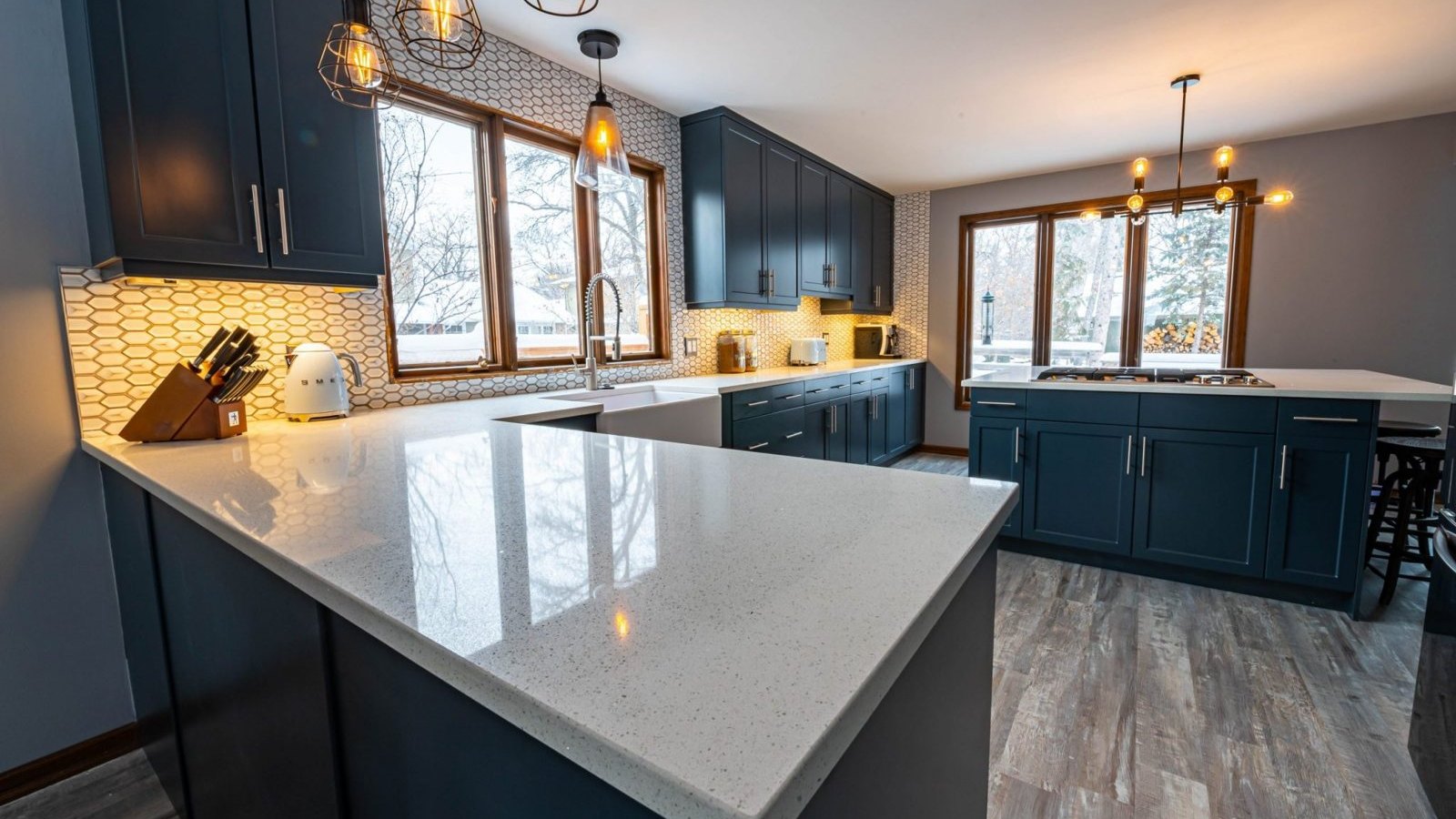
Quartz vs Porcelain Countertops: Which Should You Choose?
COUNTERTOPS
Quartz and porcelain are both non-porous and easy to live with, but they handle heat, edges and sun differently.
By Roland Cote, Torino Tile & Stone. Oct 23, 2026. 5 min read
I’m Roland, and Torino Tile & Stone has been a Winnipeg mainstay since 1972. People ask me all the time whether they should choose quartz or porcelain for their counters. The short answer: quartz is a comfortable fit for many everyday kitchens, and porcelain slab is worth a close look if heat, sunlight or a thin, tile-matched look matter to you. Both are non-porous, and neither usually needs sealing the way some natural stone does (check the care guide for the specific slab).
I’ll give you the honest version, trade-offs included. If you’d like the overview of what we offer first, see our page on quartz and porcelain countertops in Winnipeg.
Quartz vs porcelain at a glance
These are general tendencies, not guarantees. Individual slabs differ, so always check the care guide for the one you choose.
| Topic | Quartz (engineered stone) | Porcelain slab |
|---|---|---|
| Heat | Cannot take a hot pot directly on the surface; the resin can be marked by direct heat, so use a trivet. | Can take a hot pot directly on the surface. Following the care guide is still wise. |
| Scratches | Generally resists everyday scratching; sharp or heavy tools can still mark any surface. | Generally scratch-resistant on the surface; sharp or heavy tools can still mark any surface. |
| Chipping | Can chip at corners and edges with a hard knock. | Can chip at thin edges and corners with a hard knock; edge choice matters. |
| Stains | Non-porous, so most spills wipe up; leaving strong dyes or oils sitting is not advised. | Non-porous, so most spills wipe up; leaving strong dyes or oils sitting is not advised. |
| Maintenance | Typically mild soap and water; usually no sealing. | Typically mild soap and water; usually no sealing. |
| Seams / edges | Seams depend on slab size and layout. Many edge profiles are available. | Seams depend on slab size and layout. Thin edges are popular; some profiles may be limited. |
| Outdoor use | Long, strong sun may change the colour of resin over time, so it is not usually the first choice outdoors. | Often considered for outdoor kitchens because of sun and weather tolerance; confirm for the specific slab. |
| Look / patterns | Consistent patterns and a wide range of colours, including white and veined looks. | Large-format patterns that can imitate stone or concrete; can match floor or backsplash tile. |
What Is Quartz Countertop Material?
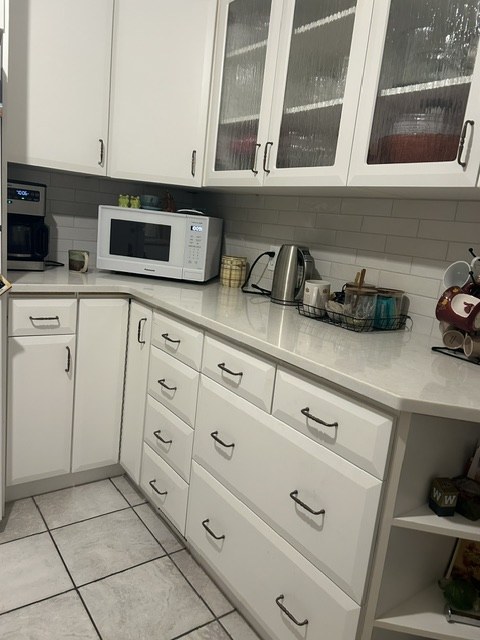
- How it’s made. Quartz countertops are made from crushed stone, resin and pigment, formed into a slab. You’ll also hear it called engineered stone (quartz).
- Where it works well. Consistent patterns, many white and veined looks, and lived-in family kitchens.
- Where to be careful. The resin in quartz doesn’t like direct heat, so use trivets.
What Is Porcelain Slab Countertop Material?
- How it’s made. Porcelain slab is a large-format sheet of fired porcelain made for counters and walls.
- Where it works well. Heat and sunlight tolerance, a thin modern look, and matching the slab to your floor or backsplash tile.
- Where to be careful. Thin edges and corners can chip if hit hard. I’d rather say that plainly than have you find out later.
Head-to-Head: The Questions That Decide It
Three questions settle most kitchens. Everything else is a refinement.
- 01Heat and hot pansHere’s the practical difference I tell people about: you can set a hot pot straight onto porcelain. You can’t do that with quartz, so with quartz I always say use a trivet. Whichever you choose, follow the care guide for that slab.
- 02Chips and edgesAny countertop can chip at a corner or edge. Porcelain’s thin edges deserve extra thought, and your edge profile choice matters. Ask to see the edge on the exact slab.
- 03Sunlight and fadingPorcelain is often chosen for sunny spots and outdoor use. Quartz resin can change colour with long, strong sun exposure, so I’d ask before using it by a big south-facing window or outside.
“You can set a hot pot straight onto porcelain. You can’t do that with quartz.”
A Few More Differences
- Stains, cleaning and sealing. Both are non-porous and typically wipe clean with mild soap. Many people choose them over natural stone to avoid sealing.
- Look: veining and pattern. Porcelain can carry a printed pattern through full-size slabs, while quartz patterns are consistent from slab to slab. Come see the actual slab in person, because photos lie.
- Edge profiles and thickness. Your edge choice changes both the look and how the counter wears, so look at the edge on the exact slab you’re considering.
- Seams and layout. Seams show up depending on slab size and the layout of your kitchen. Ask to see the layout before you commit.
Which Fits Which Room?
- A busy family kitchen. Either can work for everyday wipe-down life. Think about edges and hot pans.
- A spice-heavy kitchen. If you cook with turmeric, oil and a lot of heat, both are non-porous and wipe clean.
- Sunny kitchens and fireplace surrounds. This is where porcelain’s heat and sun behaviour is worth a look.
- Bathroom vanities. Either can work. Think about moisture, edge wear and matching the floor tile.
- Matching counters to your tile. Choose counters and tile together, under the same light, so they look right as a pair. If you are also choosing floor or wall tile, our post on natural stone vs porcelain tile covers that side.
What About Cost?
Cost depends on pattern and design, slab size and how much of it is usable, edges and cutouts, thickness, installation, and removing old counters. The slab price alone doesn’t tell the whole story, so ask for a written quote for your kitchen.
A Quick Checklist to Choose
- How do you cook?
- Where does the sun land in your kitchen?
- Do you want a thin edge?
- Are you matching your tile?
- What is your budget?
- Do you want to see the slab beside your cabinets and floor?
Where Our Slabs Come From
Our slab suppliers include GS Granite and Topaz, among others.
What to Ask Any Showroom Before You Buy
- How are the edges finished on the exact slab you’re considering?
- What do the care instructions say?
- What will the layout and seams look like in your kitchen?
- How are chips handled?
Frequently Asked Questions
Is porcelain better than quartz for countertops?
Neither is better for everyone. For me it depends on how you cook, where the sun falls and what look you want. Porcelain is worth a look if heat and sunlight matter, and quartz is a comfortable everyday choice. The easiest way to decide is to see both in person.
Which is more expensive, quartz or porcelain?
Porcelain is typically priced a little higher than quartz as a rule, though it varies by pattern, slab size, edges and installation. The reason is availability — porcelain slabs are less commonly stocked in Winnipeg right now. I’d rather give you a written quote for your kitchen than a guess here.
Can you put a hot pan on quartz? On porcelain?
With porcelain you can set a hot pot straight on the surface. With quartz you can’t, because the resin can be marked by direct heat, so use a trivet. Check the care guide for the slab you pick.
Do porcelain countertops chip easily?
Any countertop can chip if a corner or edge takes a hard knock. Porcelain’s thin edges are where I’d be most careful, so edge choice matters. Ask to see the edge in person.
Are porcelain countertops fragile?
Not in everyday use, but they’re not indestructible either. Heavy impacts at edges and corners are the risk to think about, so the layout and edge profile are worth discussing.
Do quartz or porcelain countertops need to be sealed?
Both are non-porous, and the care guides typically don’t call for sealing the way some natural stone does. I’d still follow the instructions for your specific slab.
Can porcelain countertops be used outdoors? Does quartz fade in the sun?
Porcelain is often considered for outdoor spaces because of how it handles sun and weather; I’d confirm for the specific product. Long, strong sun can change the colour of quartz resin over time, so I’d ask before using it outside or by a very sunny window.
Which is better for a busy family kitchen?
Either can work well. Think about how you cook, how much hot cookware comes off the stove, and which edge you like. If you cook with lots of spices or oil, both wipe clean because they’re non-porous.
Can porcelain countertops match my floor or backsplash tile?
Often, yes, and this is one of my favourite parts of the job. Being a tile showroom, we can lay your counter option beside your tile and look at both under the same light.
Which is better for a bathroom vanity, quartz or porcelain?
Either can work. Think about moisture, edge wear and matching the floor tile. A short chat about your bathroom usually makes the choice clear.
See Quartz and Porcelain Next to Your Tile
Photos can take you part of the way. Come and see the slabs next to your tile, cabinets and floor, and we can talk through your kitchen at a relaxed pace. Torino Tile & Stone has been a Winnipeg mainstay since 1972, and I’d be glad to help you choose.Book a one-on-one consult by appointment
Consults are by appointment, one hour, Tuesday to Saturday, mornings 10 a.m. to 12 p.m. or afternoons 1 p.m. to 4 p.m. Pick a time on our Contact page and we’ll confirm it by email.
Torino Tile & Stone, 5-3 Saint Mary’s Road, Winnipeg, MB R2H 0T1
Phone: 204-233-4148
Roland Cote, Torino Tile & Stone | torinotile.com